ClearedIn
Make security relationships understandable
- Find an identityEmployee record
- Inspect a connectionLinked account
- Read the contextConnection details
Problem
A technically correct identity graph could still ask too much of the person trying to understand employee relationships and security context.
Approach
I worked on the first product experience around the identity graph. The focus was translating that relationship model into a usable security workflow: helping people make sense of the relationships, rather than leaving them to interpret a diagram on their own.
Make a relationship inspectable
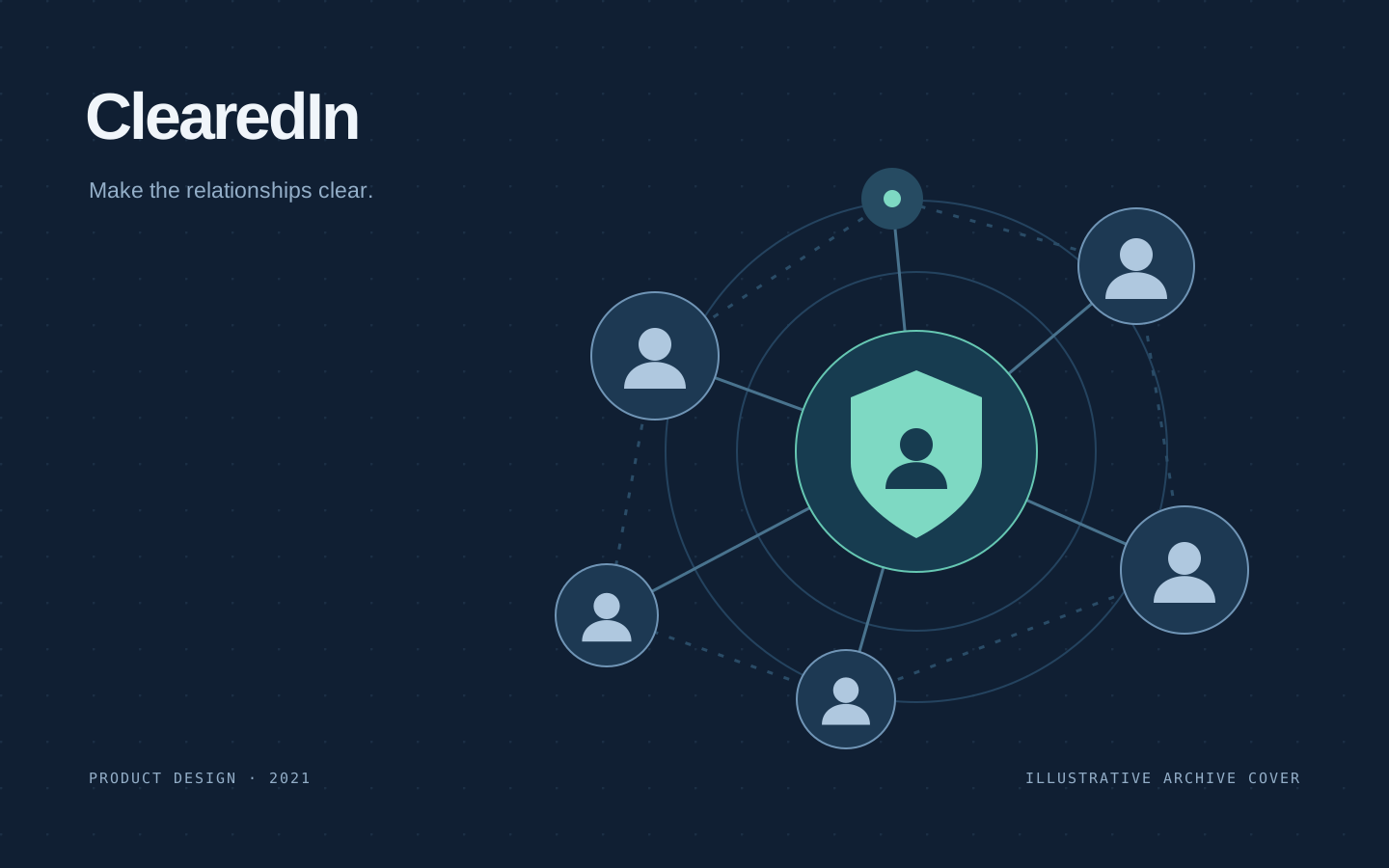
A useful security view helps the reader identify the entities involved, understand how they are connected, and decide what to inspect next. The case focuses on making that relationship legible. The archive illustration represents the problem space.
Start with the security question
An analyst may arrive with a name or a relationship to investigate. An identity graph is useful when the analyst can recognize the entity they started from, read a connection, and tell which neighboring record merits inspection. That sequence sets a clearer goal than simply showing more of the graph.
Decide what belongs in the graph
The graph is good at showing who or what is connected. Details such as identity attributes and relationship context need a quieter reading surface. A focused detail view is a design direction for making those two jobs coexist without adding another label to every node.
Walk through an investigation
The illustrative sequence starts with an employee, highlights one connection, and brings its context into view. It demonstrates the interaction idea without assigning risk to any person or implying that this is a shipped screen.
Outcome
The work produced an initial product experience around the identity model. ClearedIn was subsequently acquired; this case documents historical design work.